
Building Trust in Agentic AI for Autonomous Marketing
Designed the agent control interface for an agentic AI platform managing millions in marketing spend. The core challenge was making autonomous decisions transparent, controllable, and safe to delegate to.
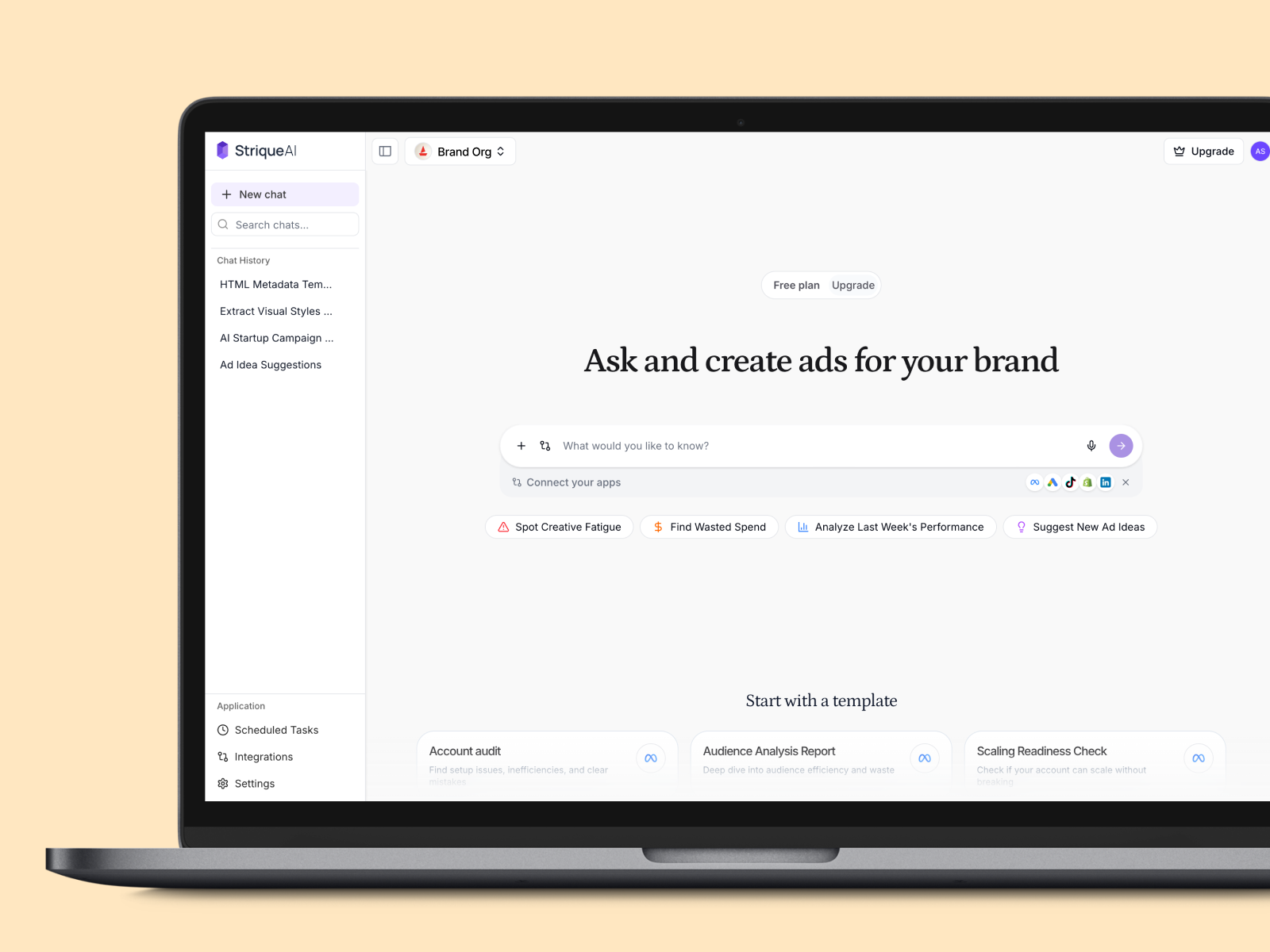
Strique's ambition: an AI platform that runs your entire marketing stack autonomously. Meta campaigns, Google Ads, SEO, email. The AI makes decisions, executes, and reports results.
The product challenge was trust. Users won't delegate autonomous control to an AI they don't understand. This isn't a UX problem. It's a product architecture problem that starts with design.
Product
Strique
My role
Lead Product Designer
Timeline
Q1-Q2 | 2023
Skills
AI Product Strategy, Mental Models, Interaction Design, Cross-functional Leadership
The Core Problem
Autonomous systems fail when users don't understand them. But showing users everything the AI is reasoning through creates noise. The interface had to walk a narrow line: enough transparency to build trust, but not so much that it overwhelms.
Additionally, autonomy in marketing isn't binary. Some decisions (budget shifts) need approval. Others (bid adjustments) should run silently. The interface had to communicate which autonomy level applied to which decision, and let users adjust their risk tolerance.
Business and Product Constraints
Meta campaign creation involves Facebook connection, pixel verification, product feed detection, Shopify integration, audience setup, budget allocation, and creative selection. That's eight decision points with multiple branching states.
Each platform has its own API quirks and rate limits. Real-time data isn't always available. The interface had to handle missing information gracefully.
The biggest constraint was behavioral: marketers won't delegate autonomous access to an AI they don't understand. They've seen plenty of marketing tech hype. We needed proof of competence before they'd grant control. This meant the product had to earn trust through radical transparency.
Strategic Decision: Trust Through Transparency
I defined a three-layer agentic AI design pattern: Brief, Delegate, Report. Users state intent. The AI surfaces its plan and requests approval at decision points where it is uncertain. Once approved, it executes autonomously and reports back with results and confidence scores. This pattern became the architectural spine of the entire product.
The key design choice: when the AI doesn't know something, it asks one clear question. It doesn't generate guesses or vague prompts. Users see exactly what information the AI needs and why. This turned uncertainty into an interaction point instead of a failure state.
I aligned the product, engineering, and business teams around this model. Everyone had to commit to the mental model before we could ship, which meant no sneaking in features that violated the Brief-Delegate-Report pattern.
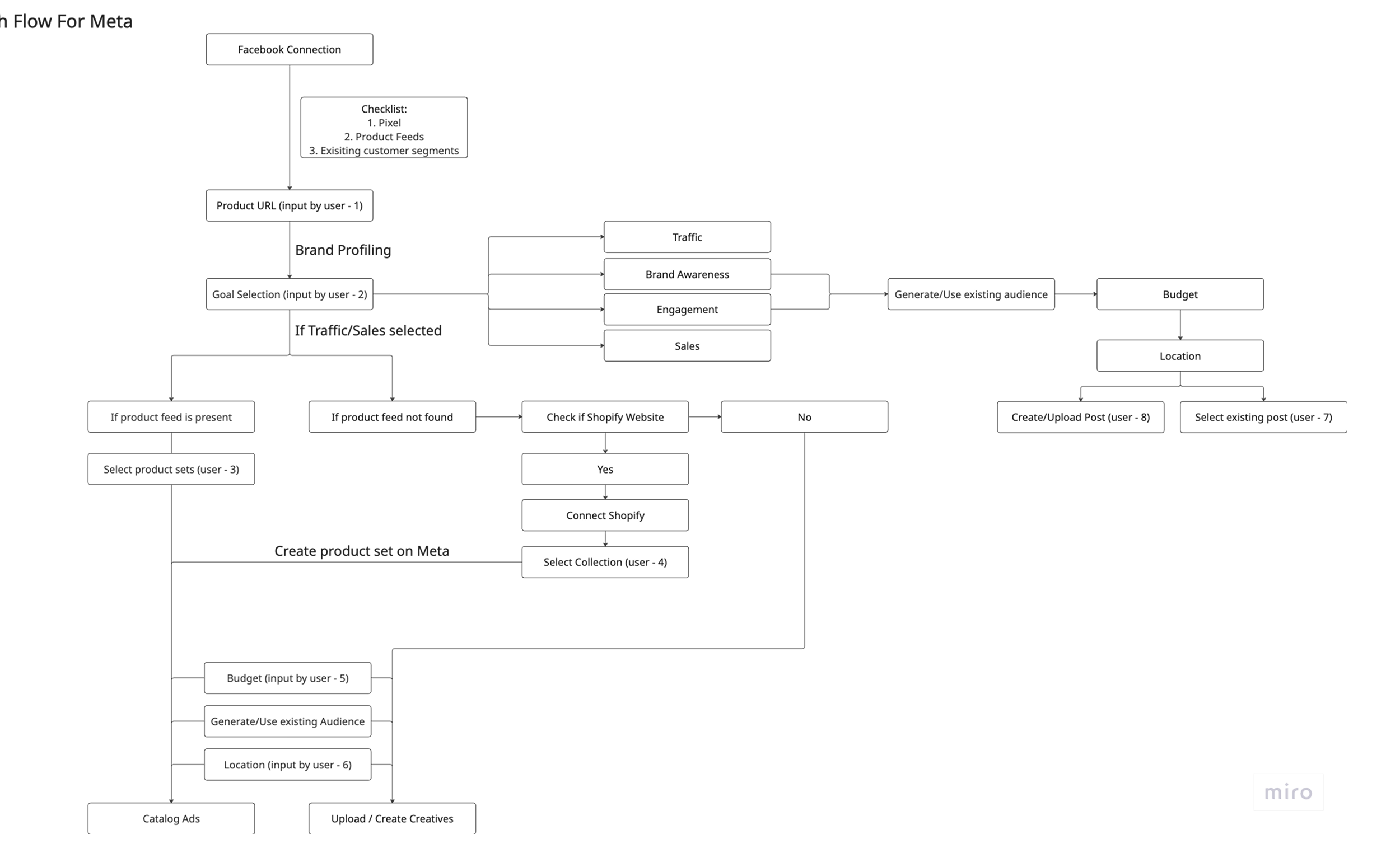
Design Rationale and Key Decisions
Explicit autonomy levels
Users see exactly which decisions the AI makes alone, which ones need approval, and why. Risk tolerance is a settings choice, not a hidden assumption.
Confidence indicators
When the AI is uncertain, it says so. No overconfident guessing. This single choice determined whether users trusted the system.
Activity visibility
A parallel activity thread shows what the AI is working on in real-time. Users watch their campaigns get built, not just see a finished result.
Approval gates at high-risk moments
Budget changes, campaign launches, spend scaling. These have explicit approval cards. Users stay in control of money.
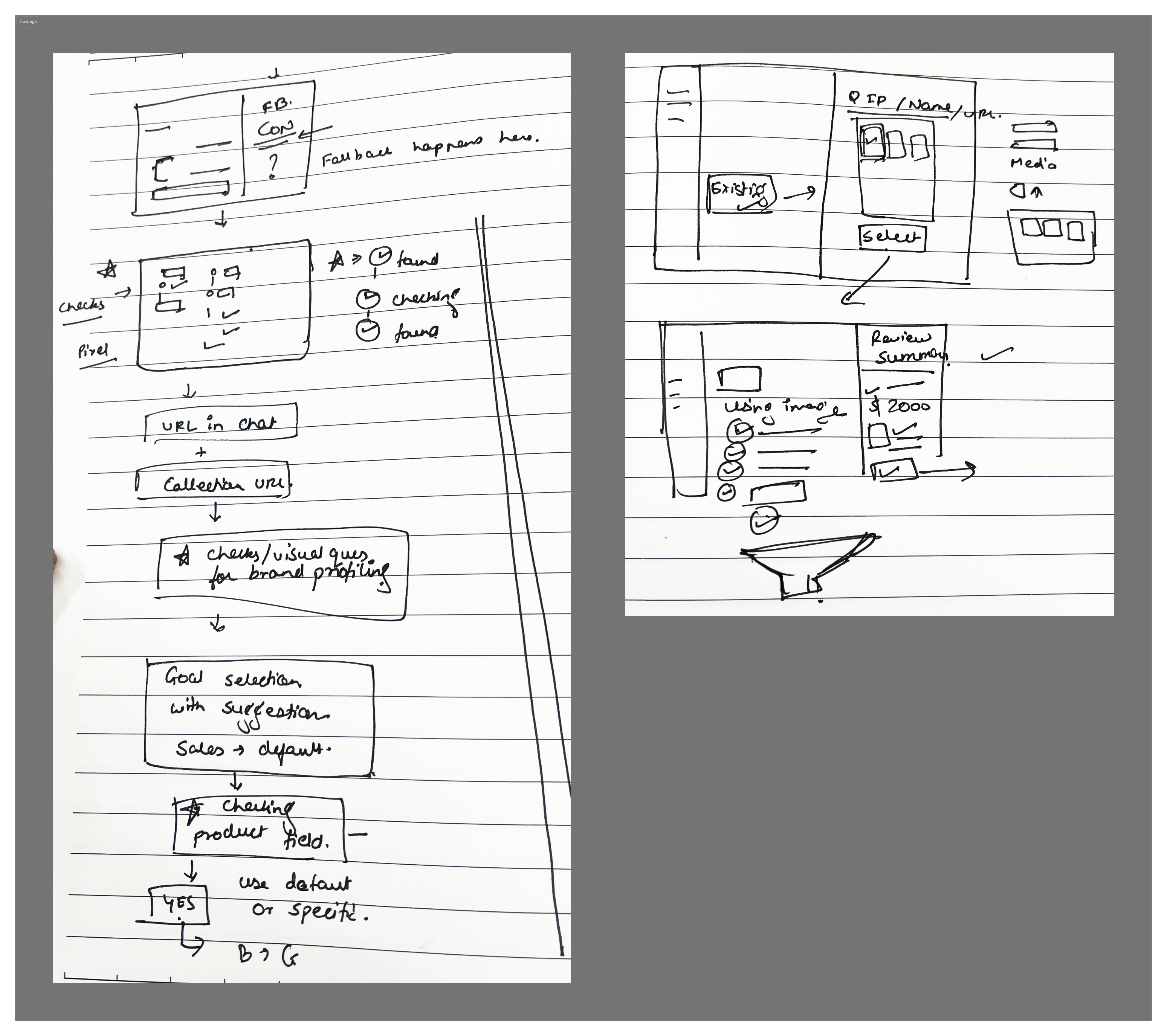
Agentic AI UX Patterns and Systems Design
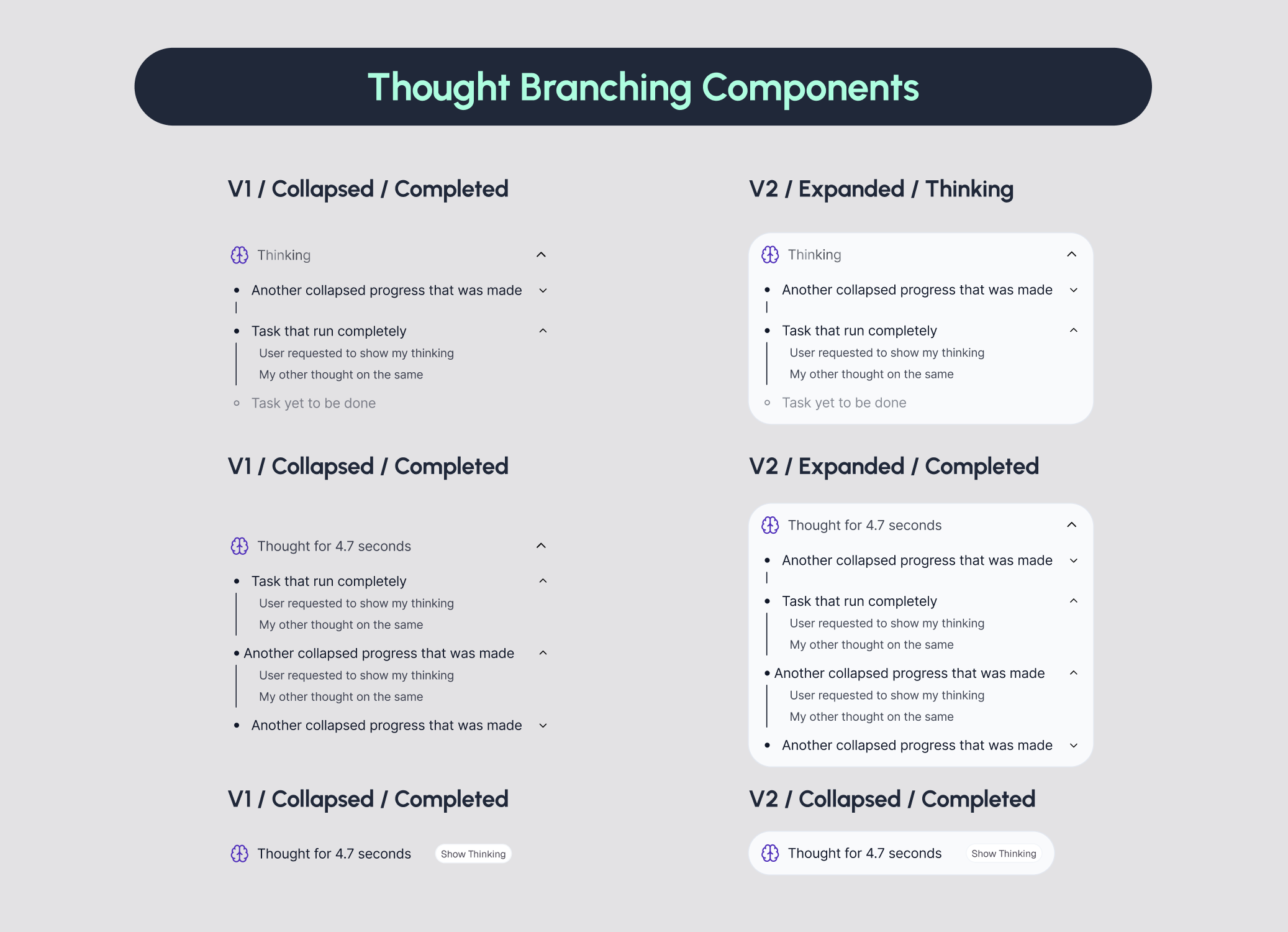
I designed five core agentic AI UX patterns: user brief, AI response, action card, clarification request, and result summary. Each pattern carries distinct status states: in-progress, completed, needs approval, and failed. These are not generic UI components. They are purpose-built AI design patterns for agent workflows, designed to scale to any future agent type without redesign.
The thought-branching pattern was the most critical. It externalises the agent's reasoning in two modes: collapsed for users who want only the outcome, expanded for users who need to audit the full decision tree. Progressive disclosure of agent reasoning is a foundational agentic AI design pattern: surface the agent's thinking when trust demands it, suppress it when it creates noise.
Outcomes and Impact
1,200+ users across 38 countries
Primary interface for autonomous marketing. High activation and engagement metrics.
82% autonomy adoption rate
Most users let the AI run autonomously for routine decisions after initial trust-building phase.
5x faster campaign setup
Traditional Meta campaign setup takes 2-3 hours. Via AI chat, same result in 20-30 minutes.
Zero-to-one design system
Shipped a component library that scaled to new agent types without redesign.
What This Taught Me
Designing agentic AI products is not about making interfaces prettier. It is about making the agent's mental model transparent and its autonomy boundaries explicit. The AI design patterns that matter most handle uncertainty, approval gates, and failure recovery. Users delegate to agentic systems when they understand the agent's limits and can see its reasoning. Transparency is not a feature. It is the core mechanic of agentic trust.